
Contributed by Rachael, Ancesister @ Ancestreats.
This elegant fish dish can be served any time of the year. It is a special first course, following the conclusion of a Passover Seder; at the beginning of the actual meal; either before or after the matzo ball soup depending on how ready things are in the kitchen. The traditional accompaniment is a fresh beet-horseradish relish called Chrain (Yiddish: חריין, khreyn) that I will share in the next post.
When you are preparing a meal for a large dinner party, it is perfectly acceptable to make tiny shortcuts to save time, especially if the results are impressive. This recipe can become one of your best friends if your crowd looks forward to the fish course. I honestly don’t remember from whom I learned this simple recipe. When I was a newlywed, my husband and I were welcomed into the homes of several established families for holiday meals. While helping in the kitchen, I always listened as my hostesses offered unsolicited kosher cooking tips. This came from that period.
I know Fran, my own grandmother, used to make her gefilte fish the long way (with fresh fish) and the short way (with frozen loaves). She never let me watch this business. I remember her telling me that when she was growing up, the family kept live fish in their bathtub until it was time to prepare this forcemeat dish. The deboned, chopped up fish (carp, pike, whitefish) would have been stuffed into the fish skin and poached. I don’t remember hers being sweetened with sugar and topped with carrots and onions (Galitzianer-style) or savory and seasoned with pepper (Litvak-style); frankly, it is because I refused to eat this course as a child. What a shame! By the time I was interested in learning how to prepare such a fish course, Grandma was satisfied to spoon it from a jar. When she downsized from a villa to an apartment in Florida, she gave me a wooden bowl with a rounded bottom that she and her own mother used for chopping up their fresh fish. The double-handled blade they would have used was long gone.
Grandma’s recipe would have included matzah meal to aid her formation of fish balls. The matzah meal would have served as a binder to “stretch” further the fish and help eliminate the need for picking out errant fish bones at the table on Shabbat. Religiously, it is forbidden to pick out bones on the Sabbath, and the fish that would have been used in such a preparation would have been bony and a challenge to eat in whole form.
—–
INGREDIENTS
3 (22 ounce each) frozen gefilte fish loaves; defrost in their wrappers in the refrigerator
1 can (14.75 ounce | 475g) wild Alaskan salmon, well-drained
1/4 cup chopped fresh dill (or cilantro if you are going for the Southwestern flavors in your subsequent meal)
1/2 tsp pepper (optional)
*If you want or need to stretch the fish further, add 1 cup of matzah meal to each layer, and the resulting loaves will be larger and require a larger loaf pan. Unless you use gluten-free matzah- meal, this will negate the gluten free-ness of the original recipe.
DIRECTIONS
Preheat the oven to 350F (or 375 in high altitude). Spray 3 loaf pans (9×5 in each) with nonstick spray.
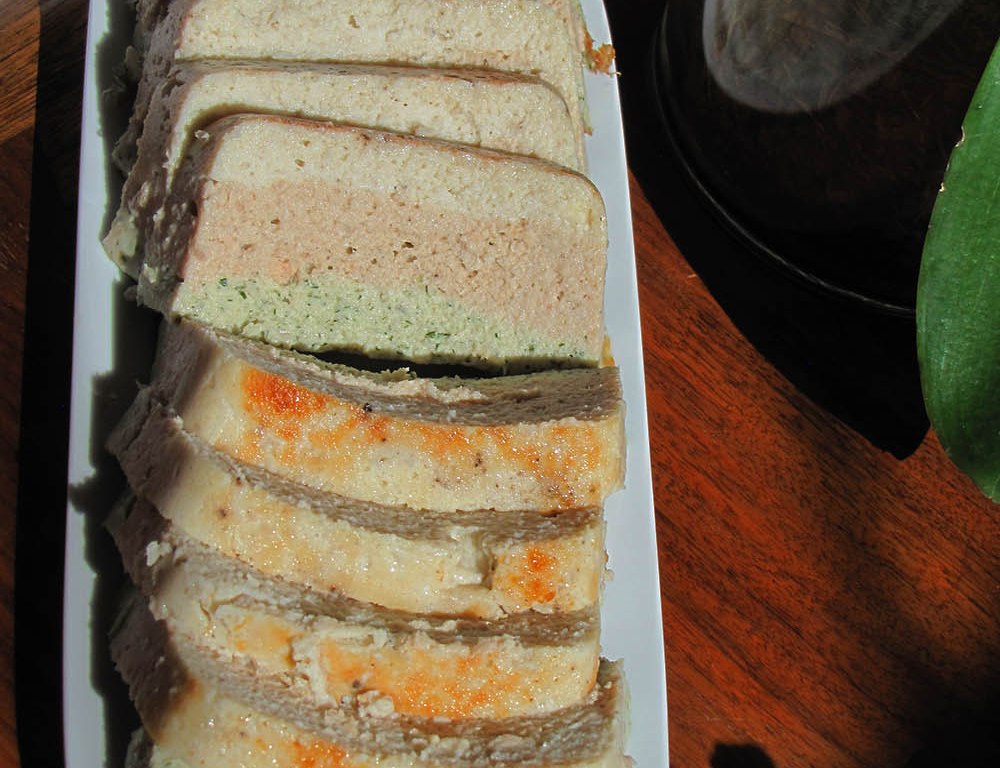
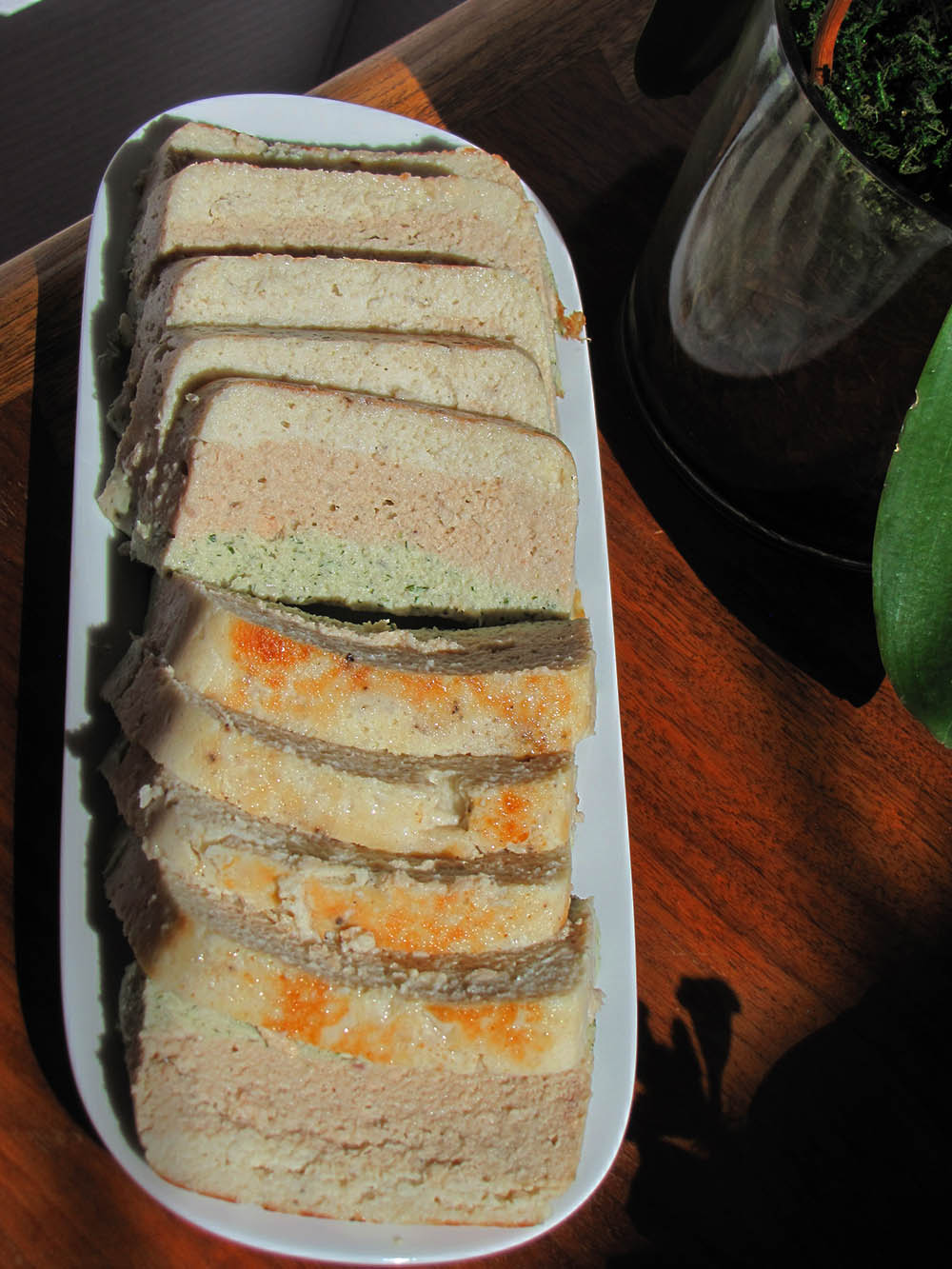
First Layer: Unwrap the one gefilte fish loaf. Place it in a large non-reactive bowl, and add the optional pepper if you choose. Mash it evenly up then divide the mixture evenly between 3 loaf pans. Spread it evenly with a spatula.
Second Layer: Unwrap the second loaf. Select the steel blade for your food processor. Place the drained salmon and the loaf inside the bowl of your food processor. Process until combined. Divide the mixture and spread evenly in the loaf pans to make your second layer. You need not clean the food processor out for the next step.
Third Layer: Process the dill or cilantro in the food processor with the steel blade until minced. Unwrap the third fish loaf and add it to the processor bowl. Pulse until combined evenly. Divide the mixture again, spreading evenly in the loaf pans to make a third layer. Cover each completed loaf pan with cooking foil.
Bake covered at 350F (or 375 in high altitude) for approximately one hour. The yield is 3 loaves (6-8 servings each).
Cool and store in the refrigerator. It will “thicken” up to make slicing the resulting loaf easy; you will do that when you plate it either on a platter or on individual dishes. Serve cold or at room temperature with fresh beet-horseradish relish.

 ancestreats.com
I have eaten this and it is simply delicious.