


Recipe shared by Leslie, Ancesister @ Ancestreats.
My first food memory is baking a Challah bread with my grandmother, Fran, my sister, Rachael, and my Auntie Arlene. It’s a simple recipe and memory. However, when I think back to being in the kitchen with everyone, I instantly feel warm and smile. There was music on the radio, sunshine coming through the kitchen window and a room full of controlled chaos and laugher as my Grandmother made silly faces for our amusement and she and my Aunt danced their way around the kitchen preparing all of the dishes. My sis and I helped with the bread. And, then the best part was when Grandma let us braid the Challahs.
Lately my toddler daughter, Mini Ancestreats (a.k.a. Bunny), has been keeping me company in the kitchen. She loves “washing dishes” (let’s hope this sticks) and helps out by adding in ingredients and mixing. A light eater, it’s also having a positive impact on her enthusiasm towards eating. Bunny recently also has been lucky to enjoy some cooking/baking time with her Grandma and Safta. I can only hope that she’ll look back on these moments with as much happiness as I do.
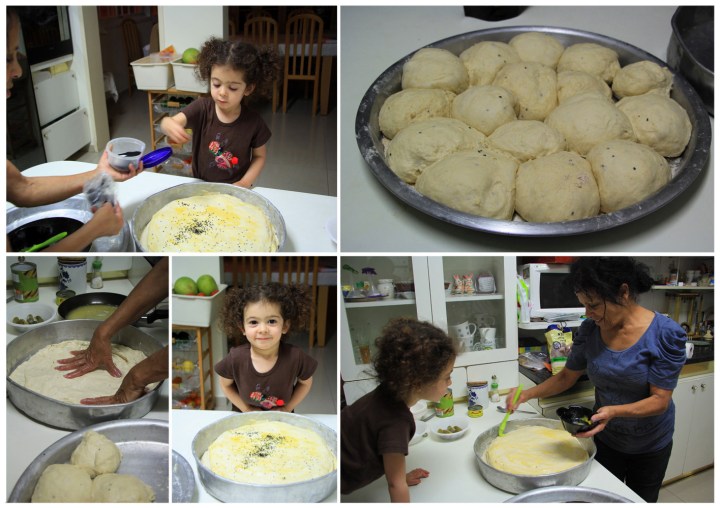
Sabaya is traditional Yemenite bread. It’s typically prepared for Saturday morning breakfasts. You will also find it at family gatherings and celebrations in Israel. There are not a lot of ingredients, so it’s hard to understand why it is just so irresistible. It is, especially if you are lucky enough to eat it fresh out of the oven. Bunny helped her Safta make this particular Sabaya for our cousin’s wedding Henna celebration. And so the tradition continues…
Ingredients
- 1 kg flour
- A pinch of salt up to 1 tablespoon
- 3 tablespoons sugar
- 1.5 tablespoons of yeast
- 3 cups lukewarm water (start kneading the dough with two and a half cups of water and add the rest as needed)
- 100 grams of butter
- 1 heaping spoonful of Nigella Seeds
- Large round mold with low sides/aluminum or foil-lined
Instructions
First make the dough by adding the flour, salt, sugar, yeast, and water together. Knead the dough. Add a little bit of the Nigella Seeds in while you are doing this, but save most for the last step before putting in the oven. Let the dough rest and then knead again. Do this several times. Then cover it with a saran wrap. Let the dough rest for a half an hour in the refrigerator. Divide the dough into small balls – around the size of a tennis ball. You will use these balls to make the layers of bread. Grease your cooking pan/tray. Put some melted butter in your hands and then start to take your balls of dough and flatten/stretch from all sides and place in the center of the greased/oiled tray. Add more butter to the top layer before adding on another one. Continue until you use all of the dough balls and paint on more butter on the top layer. Note that the bottom and top layers should be slightly bigger than the rest. Sprinkle more Nigella seeds on the top layer. Preheat your oven to 150 degrees Celsius and then bake for around 45 minutes – up to an hour depending on your oven. Your Sabaya will be ready when it looks brown like the photo above.

 ancestreats.com