
Submitted by Rachael.
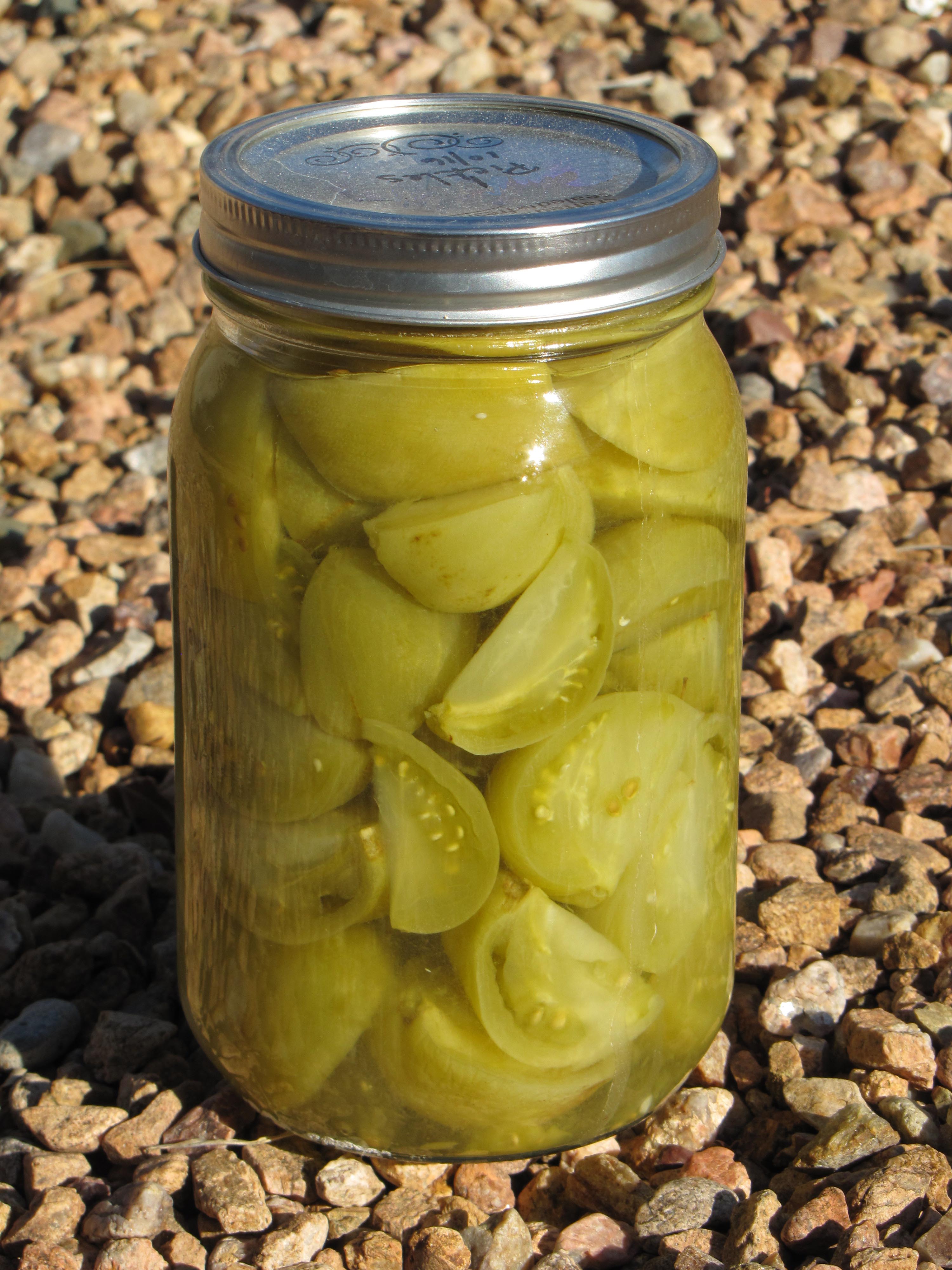
Pickles of beets, cucumbers and green tomatoes have always been staples in my family’s kitchen. My father made sure we had a jar of pickled green tomatoes on hand in our fridge, to enjoy with his corned beef sandwiches, our holiday meals, and sometimes in his salads. When I asked dad if he ate them in his house as a kid, his eyes lit up and he told me: Yes and his mother used them to help him learn to count.
Dad was from Malden, a small city 6 miles north of Boston, Massachusetts, and his parents had Eastern European roots. At the onset of autumn, his father, Grandpa Louis, would visit a local farm stand and return with baskets of green tomatoes and cucumbers. His mother, Grandma Ruth, had two, 5-gallon white ceramic crocs with easily removable lids that she placed in her cool basement. After fixing her pickling brine with these fresh vegetables in the crocs, she left them there for two weeks. This drove my dad, then called Stevie, crazy with anticipation. He made a daily ritual out of paying a visit to the crocs. Stevie stuck his finger in the brine, removed it, licked it, and then asked his mother if the pickles were ready. Ruth would tell him, “No Stevie, you have to wait 13 more days…12 more days…10 more days…,”etc. This went on until she reached 0 days, and finally let him reach in and grab one to eat, strait out of the croc. What satisfaction for a little boy.
When I relocated from the East Coast to Albuquerque, New Mexico, I was disappointed to discover that the supermarkets do not carry pickled tomatoes. It happened that my best friend’s mother-in-law owns a cattle ranch on which she also grows a bounty of vegetables. She shared her green tomatoes at the end of the season last year so we could make several batches of Stevie’s favorites, to continue my family’s tradition. These have the right flavor for our table now.
Region: Europe
Ingredients
Makes 3 pint jars
- 2 pounds green tomatoes, washed, stemmed and halved or cut into wedges (depending on fruit size). Leave the seeds in.
- 1 cup white vinegar
- 1 cup water
- 1 tablespoon pickling salt
- 3 teaspoons dill seeds
- 6 whole, large, peeled garlic cloves
- 3/4 teaspoon peppercorn
- 3 bay leaves
Preparation
- Sterilize four pint jars; prepare that extra one just in case the tomatoes don’t fit as expected. Safely remove jars to a towel on the counter next to the stove, upright and ready for filling. Place lids and rings in a small sauce pan, cover with water and simmer on low heat.
- Make the brine: combine vinegar, water and salt in a pot and bring mixture to a boil.
- Into the bottom of each hot, clean jar, place the following: 1 teaspoon dill seeds, 2 garlic cloves, 1/4 teaspoon whole peppercorns, 1 bay leaf
- Pack the green tomato wedges into the jars. Press them in as tightly as you can without squashing them. After the hot brine goes in, they will shrink up in the liquid. Pour in the liquid solution leaving a ½” headspace. Remove the air bubbles with the handle of a fork, or a chopstick. You may need to add more brine once the contents settle. Wipe off the rims, apply simmered lids and screw on the jar bands.
- Process in a boiling water canner for 10 minutes. If you are at high altitude refer to a time chart to determine the extra time required for your area. **Don’t overdo the processing time at whatever altitude or the tomatoes will become disappointingly mushy.** Carefully remove the jars, cool them on the towel-lined counter top. After the jars cool, remove the rings and test the seals. Grab the edge of the lid and lift the jar. If it stays on: great. Otherwise, put the unsealed jar in the fridge. You can try to reprocess it for longer time if you don’t have the needed seal, but you may cause the tomatoes to become soft. That’s a bummer.
- Give the jars at least one week to cure. Store them in a cool place for up to one year.

 ancestreats.com
Great Job, Love the Pictures and stories, SK
We like you’re pickling spirit. If you can’t find what your looking for, make it. Thank you for sharing.